
“We support our customers in making the switch.”
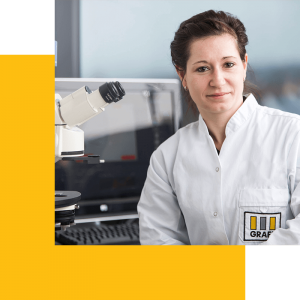
Dr. Michael Dirauf, Head of the Analytics Team at GRAFE Polymer Solutions GmbH, on the expertise and technical capabilities of the Analytics Department
Blankenhain, May 18, 2026
The current shortage of raw materials, driven by supply bottlenecks, geopolitical conflicts in the Middle East (the Iran war), and high demand, is placing a particular strain on the German plastics industry. This is leading to significant supply shortages and drastic price increases. The result: Companies are forced to switch to alternative raw materials from other manufacturers. But these can cause problems, warns Dr. Michael Dirauf, Team Leader of Analytics at GRAFE Polymer Solutions GmbH in Blankenhain. In this interview, he explains how the company supports its customers during this transition and provides insight into the work of the Analytics and Quality Assurance departments.

Dr. Dirauf, how is the GRAFE GROUP’s Analytical Department structured, and what are your responsibilities?
Dr. Michael Dirauf: Organizationally, we are part of Quality Assurance. In my role as Head of the Analytics Team, I am responsible for the technical and organizational management of the analytics laboratory. We are a team of four people, consisting of a chemist, a chemical laboratory technician, a chemical-technical assistant, and a process engineer specializing in plastics and rubber technology. Our responsibilities range from testing specific quality criteria for certain applications, to investigating the causes of problems with our products in the customer’s production process that are reported to us, to performing supporting measurements for complaint resolution. In these cases, we are called upon to identify potential causes within the process chain.
The plastics industry is currently facing many challenges. Are there any current issues that also affect your work?
Absolutely. Due to raw material shortages in general—and disrupted supply chains caused by the war in Iran in particular—many companies are having to purchase their plastics from other suppliers. This can lead to problems.
In what way?
Suppose a company has been sourcing its polypropylene from Manufacturer X and now has to switch to a substitute raw material from Supplier Y. This can lead to problems, particularly with regard to melt viscosity and differing additive formulations. We stand by our customers during this transition and support them by, for example, analytically comparing the raw materials and deriving conclusions or recommendations regarding our products.
How often do you encounter this issue, and how much have related inquiries increased?
We rarely encounter the topic of substitute raw materials as a direct inquiry, but the issue does come up more frequently than one might think. Most inquiries relate to known defect patterns such as migration—i.e., surface deposits—or color deviations. We sometimes only learn that substitute raw materials were used on the components in connection with these defect patterns after consulting with our customers. Experience shows that having this information early on can shorten the analysis process.
What specific problems can arise during the transition?
That always depends on the extent to which the substitute raw material differs from the originally used material in terms of additives and physicochemical properties. In any case, when planning a switch, it is recommended to first process the desired raw material without any addition of masterbatches under identical process parameters. If problems arise during this process, the process parameters must be optimized for the new material. Here, for example, attention should be paid to the formation of surface deposits. If the raw material shows no abnormalities, the masterbatch should be added in the next step. Here, too, attention must be paid to possible deposits, especially when using combination masterbatches, since—if the replacement raw material is already UV-stabilized, for example—additional UV stabilization from the masterbatch could lead to problems.
What specific solution expertise can GRAFE offer here, and what role does analytics play in this?
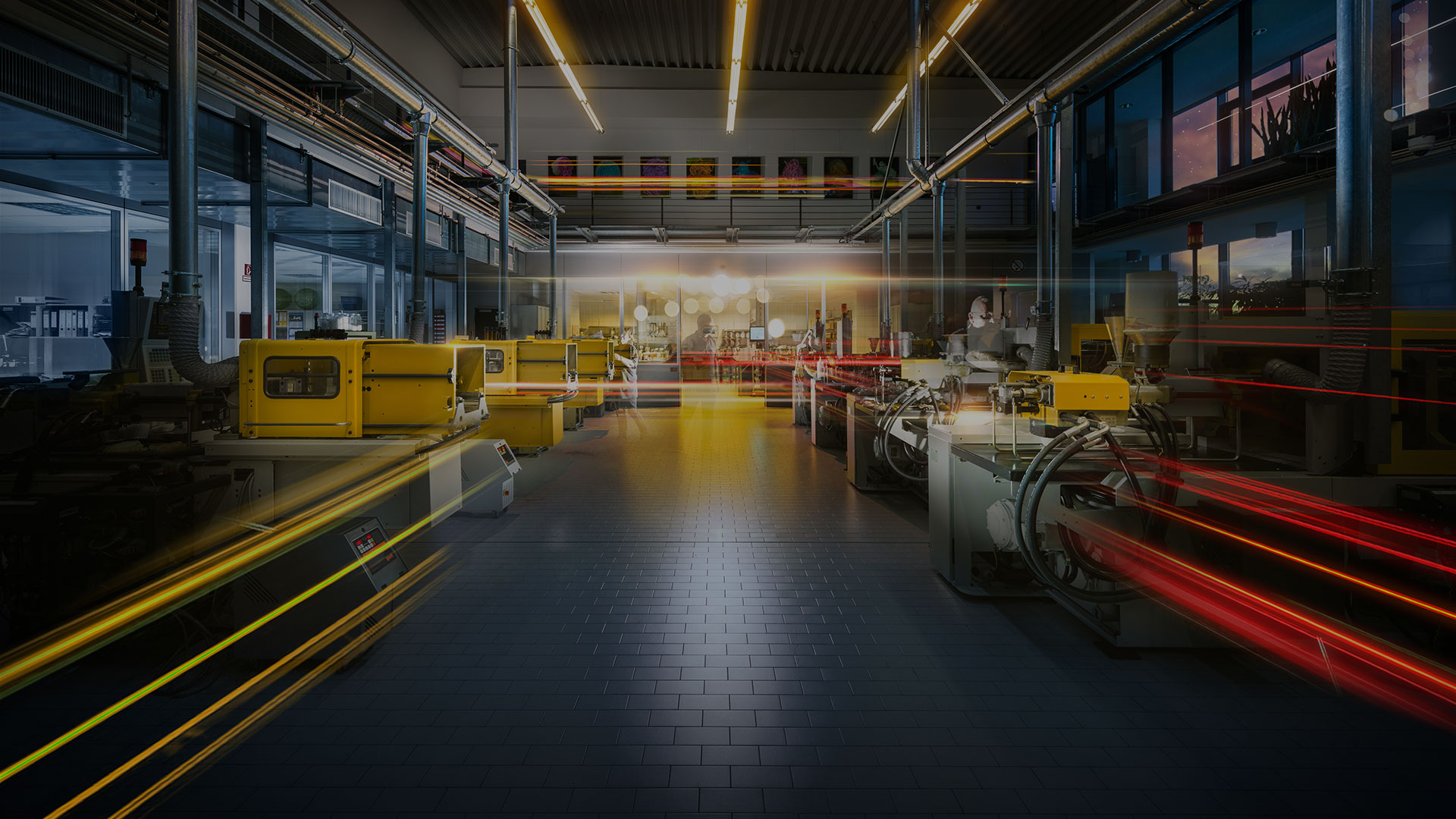
Provided the customer supplies the corresponding replacement polymer, we can simulate various scenarios depending on the specific issue and compare them with the material originally used. We can produce the appropriate test specimens in our technical laboratory. Scenarios such as material changes following artificial weathering, migration tests, color changes, and mechanical or optical properties can be addressed. All these scenarios can be evaluated through “sensory testing”—that is, visually and by touch. This type of evaluation is subjective, however, whereas analytics enables objective comparisons of the materials. Here, we can draw on a broad range of equipment, proven methods, and many years of experience in the analysis of thermoplastics.
While we’re on the subject—what specific capabilities does the analytics department have?
We offer a wide range of analytical capabilities for testing thermoplastics, as well as for identifying and quantifying polymers, fillers, pigment types, and additives. Additionally, we analyze defects, inclusions, and the mechanical and chemical properties of various materials. Our state-of-the-art laboratory facilities enable application testing or can provide supporting data for feasibility studies regarding various applications or processing methods for thermoplastics.
How many requests are we talking about here? How important is the analytical department?
We’re talking about volumes ranging from 300 to 500 orders per year. The volume is similarly high across all three areas and has remained relatively stable over the years. Of course, our division is not one that generates revenue for the company, because analytics serves—in addition to quality assurance measures—purely as customer service, which is generally not monetized and is therefore part of GRAFE’s comprehensive service portfolio.
But doesn’t every masterbatcher have an analytics department like this?
That may be true. But based on my market knowledge, it is rather unusual to operate such a large laboratory. Often, orders for certain analyses are outsourced to external laboratories, whereas at GRAFE, the vast majority can be performed “in-house.” Our customers also confirm this.
“Large” certainly also refers to the technical equipment. What is the situation at GRAFE in this regard?
We can perform a wide range of analytical methods: for identifying plastics and their composition, supporting new product development, and conducting detailed failure analysis.
Can you give some examples?
Yes. Thermogravimetry, dynamic differential calorimetry, infrared and UV-Vis-NIR spectroscopy, as well as infrared microscopy. In addition, we offer infrared microscopy, X-ray fluorescence analysis, and high-performance liquid chromatography. Furthermore, we have capabilities for artificial weathering and mechanical analyses. We are thus able to perform a wide range of optical, spectroscopic, thermal, mechanical, and chemical analyses. We also have a large database for comparative evaluations that has been built up over 30 years.
What are typical problems that can arise in production?
This varies greatly depending on the processing method. One example is so-called stringing in extrusion—a phenomenon that can occur with a wide variety of polymer compounds. On the one hand, without appropriate measures, strand breaks can become frequent in complex compounds with high filler content, thereby negatively impacting productivity and throughput. On the other hand, residues dragged along by the polymer strand can significantly affect product quality. Another example is unwanted deposits on injection-molded parts. These “blooms” are deposits of volatile components from the plastic material that condense on the surface of the mold and thus on the part. Here, too, the causes can be varied. These include the outgassing of additives, residual moisture, thermal decomposition, poor mold venting, or the masterbatch being incompatible with the base plastic.
Are there any other challenges like these?
In sheet extrusion, we frequently deal with inclusions. Or quality assurance calls us in when there are issues with color deviations. In all cases, the causes can vary greatly. Figuring these out is part of our job.
How do you do that?
The process is always similar. First, we try to reproduce the defect pattern, then investigate the causes, attempt to identify the problem, and finally find an appropriate solution.
Does that always work?
Unfortunately, we don’t achieve a 100% success rate, because once or twice a year it happens that, despite extensive use of our equipment fleet and based on the collected data, we cannot identify a plausible theory regarding the underlying cause of the defect. In such cases, as a final step, we also bring in an external testing laboratory—this is generally also a GRAFE service that we provide for the customer.
Dr. Dirauf, thank you very much for the interview!
Our Service Center
We win over our customers not only with quality and price, but also by offering a comprehensive range of customized services.